
Catwalk — Magento
Platform Migration
& Optimization
From high-cost Magento Cloud to optimized Magento Community — a complete migration, upgrade, and stabilization project for a high-traffic Australian fashion eCommerce store, delivered with zero data loss and one year of post-launch technical support.
Overview
Catwalk is an Australian fashion eCommerce store offering a wide range of clothing, accessories, and promotional deals including Afterpay, free gifts, and nationwide shipping. With a loyal customer base and high transaction volume, performance, stability, and cost efficiency are critical to the business.
The project involved a full platform upgrade, data migration, performance optimization, and infrastructure cost reduction by transitioning from Magento Cloud to Magento Community Edition. Key deliverables included:
- Upgrade to Magento 2.4.3-p1 with all security patches applied
- Migration from Magento Cloud to Magento Community, significantly reducing infrastructure costs
- Complex data migration of Reward Points and Gift Card data with full history preserved
- Custom Shipping Delay Extension development
- Core Web Vitals optimization including CLS fix and performance improvements
- One year of ongoing technical support ensuring long-term stability and zero critical issues
The Challenges
High-Cost Cloud Infrastructure
The store was running on Magento Cloud, which carried significant recurring infrastructure costs that were disproportionate to the store's hosting needs. A migration to a cost-efficient environment was needed without sacrificing performance or reliability.
- Magento Cloud subscription costs exceeding business requirements
- Limited control over server configuration and optimization
- Need for equivalent or better performance at lower cost
Theme Compatibility Issues
The existing store theme had compatibility conflicts with newer Magento versions, causing visual breakages and functionality gaps that required resolution before the upgrade could proceed safely.
- Template files incompatible with Magento 2.4.3-p1 changes
- Layout XML conflicts causing broken UI elements
- Frontend JavaScript errors tied to deprecated APIs
Complex Data Migration
Reward Points and Gift Card data were stored in native Magento modules with no standard migration path. Moving this data to Amasty-powered modules on the new environment required custom development and precise data mapping.
- Reward Point balances and full transaction history at risk
- Gift Card codes, balances, and usage history locked in legacy tables
- No out-of-the-box migration tool between module systems
Poor Core Web Vitals (CLS)
The store suffered from significant Cumulative Layout Shift (CLS) issues, negatively impacting both the user experience and Google search rankings. Performance degradation also caused higher bounce rates on key product and category pages.
- CLS scores failing Google's Core Web Vitals thresholds
- Slow page load times reducing conversion rates
- Unoptimized assets impacting First Contentful Paint (FCP)
Outdated Third-Party Extensions
Multiple third-party extensions were running on outdated versions incompatible with the target Magento release, creating instability risks and potential security vulnerabilities that had to be resolved before go-live.
- Extension conflicts causing admin panel errors
- Security vulnerabilities in un-patched module versions
- Amasty modules requiring version alignment with new Magento
Zero Downtime & Data Integrity
The migration had to be executed with no data loss and minimal disruption to the live store. Any loss of customer data, order history, or loyalty balances would have immediate business and reputational consequences.
- Customer order history and account data must be preserved
- Zero tolerance for Reward Points or Gift Card data loss
- Staged rollout required to minimize customer-facing downtime
The core challenge was executing a complex, multi-layered Magento migration and upgrade with zero data loss — while simultaneously resolving theme compatibility, improving performance, and reducing infrastructure costs for a live, customer-facing fashion store.
Our Solution
We executed a comprehensive Magento migration, upgrade, and optimization project — moving Catwalk from a costly cloud environment to a fully tuned Magento Community installation, with custom data migration, a new extension, performance overhaul, and one year of ongoing technical support to ensure long-term stability.
Platform Upgrade & Migration
The existing Magento Cloud store was upgraded to Magento 2.4.3-p1 with all applicable security patches, then migrated to an optimized Magento Community environment — significantly reducing infrastructure costs while maintaining full functionality and performance.
Full audit of the existing Magento Cloud setup — cataloguing all extensions, customizations, theme files, and data dependencies before planning the migration path.
All theme templates, layout XML files, and JavaScript were audited and updated to ensure full compatibility with Magento 2.4.3-p1 — restoring visual integrity and eliminating frontend errors.
All third-party extensions — including Amasty Reward Points and Amasty Gift Card — were upgraded to compatible versions, resolving instability and closing security vulnerabilities.
The platform was migrated from Magento Cloud to an optimized Community Edition hosting environment, delivering equivalent or better performance at a fraction of the infrastructure cost.
Complex Data Migration
The most technically demanding aspect of the project was migrating Reward Points and Gift Card data from native Magento modules to the Amasty module ecosystem on the new environment — with 100% data integrity and no customer-facing disruption.
All customer point balances and complete transaction histories were exported, mapped, and imported into Amasty Reward Points with no loss of historical data.
All gift card codes, remaining balances, expiry dates, and usage histories were transferred with full accuracy to Amasty Gift Card.
Amasty modules were customized to accept and correctly interpret legacy data structures from the previous Magento native modules.
Comprehensive pre- and post-migration checks were run to verify record counts, balance totals, and data integrity across all migrated datasets.
Every customer's Reward Points balance and every Gift Card remained fully functional and accessible after migration.
Custom Shipping Delay Extension
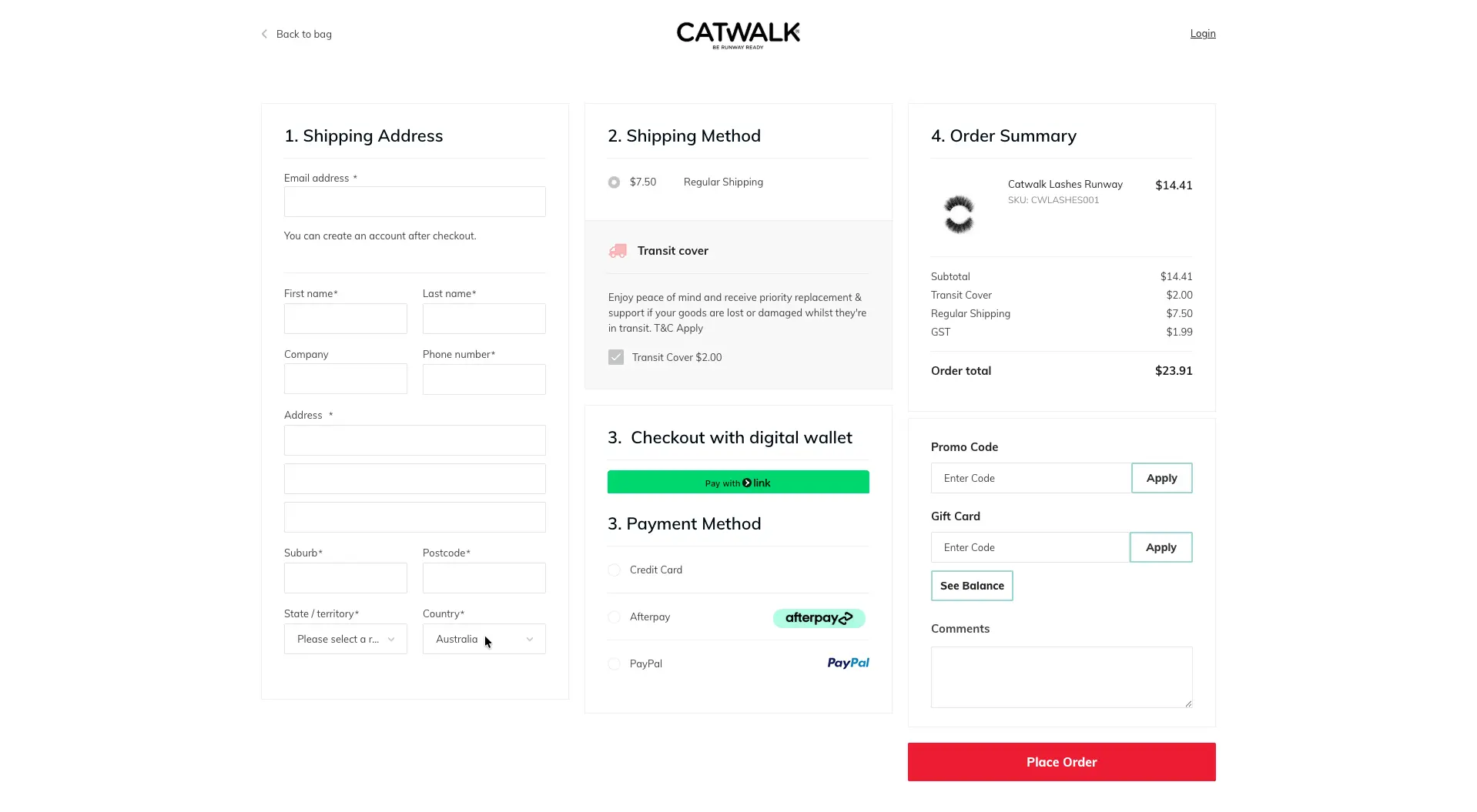
A custom Magento extension was developed to display estimated shipping delay information directly at checkout — giving customers clear expectations around delivery timelines during peak periods or supply disruptions.
Store administrators can set and update delay notices from the Magento Admin Panel — no code changes required for updates.
The estimated delay message is displayed prominently at the checkout shipping step, ensuring customers see it before completing their order.
Proactive delay communication at checkout reduced inbound customer support queries about order delivery status during delay periods.
Performance Optimization & Core Web Vitals
A comprehensive performance audit identified and resolved all Core Web Vitals issues — with particular focus on Cumulative Layout Shift (CLS), which was impacting both user experience and Google search rankings.
Identified all layout-shifting elements including images without dimensions, dynamically injected content, and web fonts causing reflows — eliminated all CLS violations to bring scores within Google's "Good" threshold.
Full-page cache configuration tuned for the new server environment, with Varnish cache rules optimized for fashion catalog page patterns.
All product and category images processed for correct sizing and format, with lazy loading implemented across listing pages.
JavaScript and CSS assets minified, merged, and bundled to reduce HTTP requests and speed up page rendering.
Combined optimizations produced measurably faster First Contentful Paint and Time to Interactive across key store pages.
Post-Launch Support & Long-Term Stability
Delivery was not the end of our involvement. We provided one full year of dedicated technical support following go-live — ensuring the platform remained stable, secure, and fully optimized through its first year of operation on the new environment.
Ongoing observation of platform performance, error logs, and stability metrics to catch and address issues before they impacted customers.
Any bugs identified post-launch — whether from edge cases in the migration or Magento version behaviour — were resolved promptly with minimal disruption.
Ongoing refinements to caching, query performance, and server configuration as traffic patterns evolved over the support period.
At the end of the support year, the platform operated with zero critical issues — all systems functional, data intact, and performance maintained at optimized levels.
System Architecture
The platform is built on a layered Magento 2 architecture, with Amasty extensions handling loyalty and gifting, a custom module for shipping delays, and a fully optimized performance layer on top of cost-efficient non-cloud hosting.
Frontend — Magento Theme
Responsive Magento-based theme with all compatibility issues resolved for 2.4.3-p1, optimized layouts, and CLS-free rendering across all device types.
Backend — Magento Community
Magento 2.4.3-p1 Community Edition with all security patches applied — handling catalog, checkout, customer accounts, and admin operations.
Database — MySQL
Fully migrated and normalized MySQL database preserving all customer, order, Reward Points, and Gift Card data from the previous environment.
Extensions — Amasty
Amasty Reward Points and Amasty Gift Card modules configured with migrated data, providing customers with seamless access to their loyalty balances and gift cards.
Custom Module — Shipping Delay
Bespoke Magento extension for admin-configurable shipping delay messages displayed at checkout, reducing customer confusion and inbound support queries.
Hosting — Cost-Efficient Setup
Optimized non-cloud server environment delivering equivalent performance to Magento Cloud at a fraction of the ongoing infrastructure cost.
Performance Layer
Advanced caching, CDN optimization, image compression, and JS/CSS minification working together to achieve Core Web Vitals compliance and faster page loads.
Support — 1 Year Ongoing
Twelve months of post-launch technical support providing continuous monitoring, proactive bug fixes, and performance tuning for long-term platform stability.
Results & Impact
Data migration success — zero loss
Infrastructure costs vs. Magento Cloud
Core Web Vitals CLS — improved SEO
Page load times across the store
Critical issues post-migration
Stable supported operations
Business Impact
100% data migration success — all Reward Points and Gift Card data preserved with full customer access retained from day one post-launch
Significant infrastructure cost reduction by eliminating Magento Cloud subscription while maintaining equivalent store performance and reliability
Core Web Vitals improved to Google's "Good" threshold — CLS eliminated, improving both user experience and organic search visibility
Faster page load times across product and category pages, reducing bounce rates and improving the overall shopping experience
Zero post-migration instability — the store went live cleanly with all functionality intact and no customer-facing issues requiring emergency intervention
One year of stable operations under ongoing technical support — no critical downtime or system failures, leaving the platform secure and ready for future growth
Technology Stack
Final Outcome
Before
- High-cost Magento Cloud infrastructure exceeding business needs
- Theme compatibility issues causing broken UI on newer Magento
- Reward Points & Gift Card data at risk with no migration path
- Failing Core Web Vitals with significant CLS issues
- Outdated third-party extensions causing instability
After
- Cost-efficient Magento Community hosting with equivalent performance
- Fully compatible theme on Magento 2.4.3-p1 with clean UI
- 100% Reward Points and Gift Card data migrated without loss
- Core Web Vitals in "Good" range — CLS fixed, faster load times
- One year of stable operation with zero critical issues
This project demonstrates how a complex Magento ecosystem can be optimized, migrated, and stabilized without compromising data integrity or performance. By combining cost optimization, technical precision, and long-term post-launch support, the Catwalk platform now operates as a high-performing, scalable, and reliable eCommerce system — with a foundation built to grow.
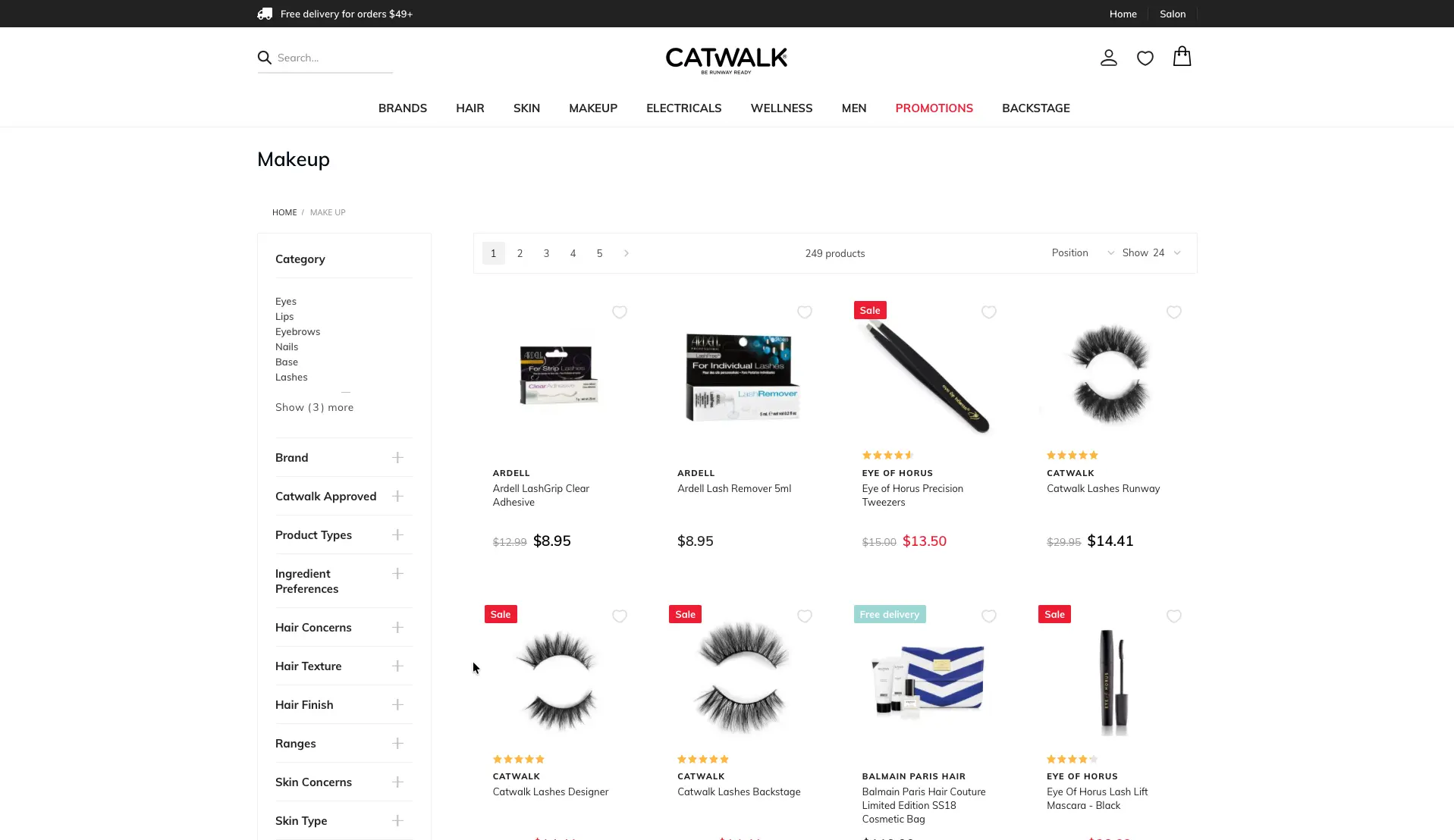
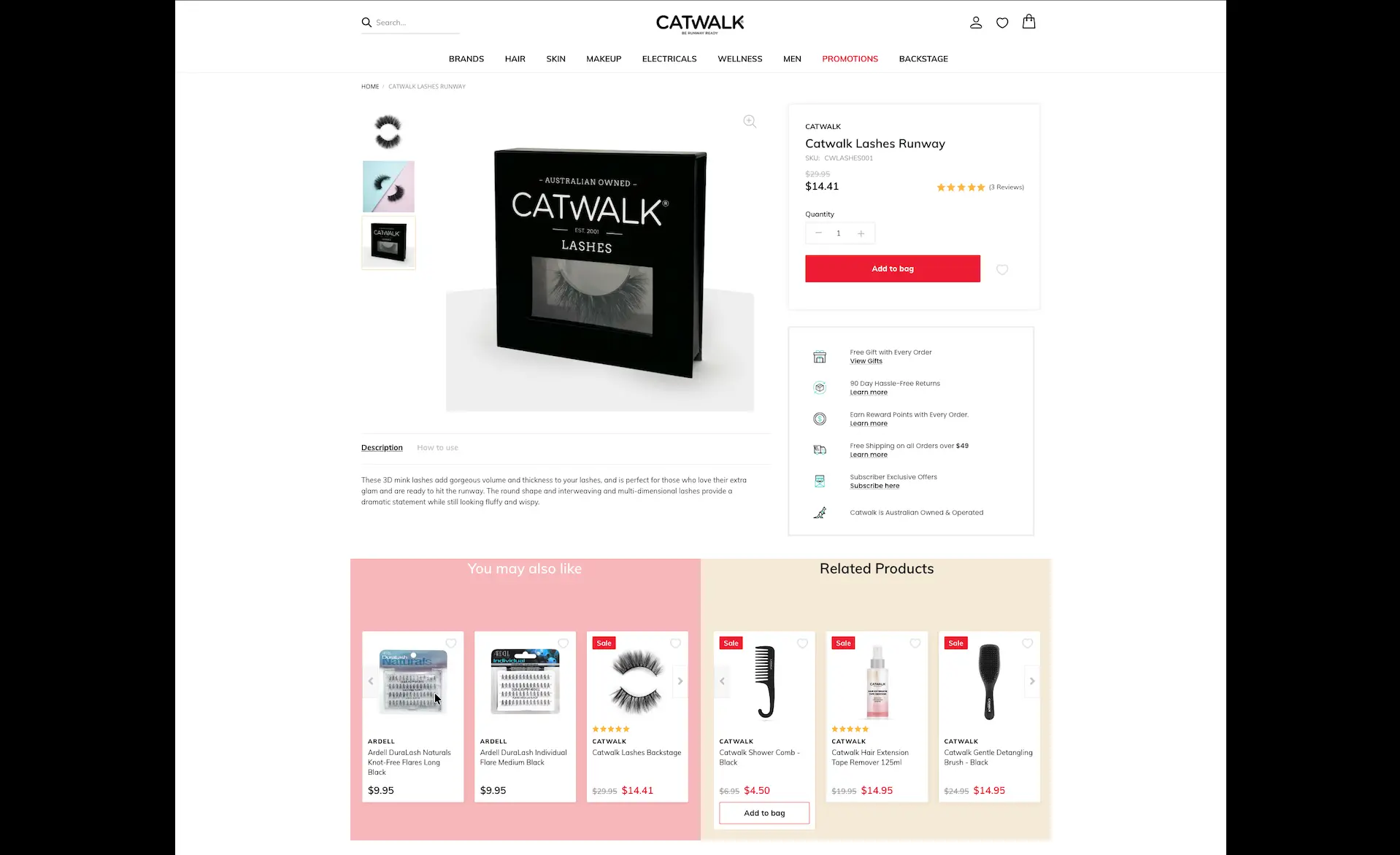
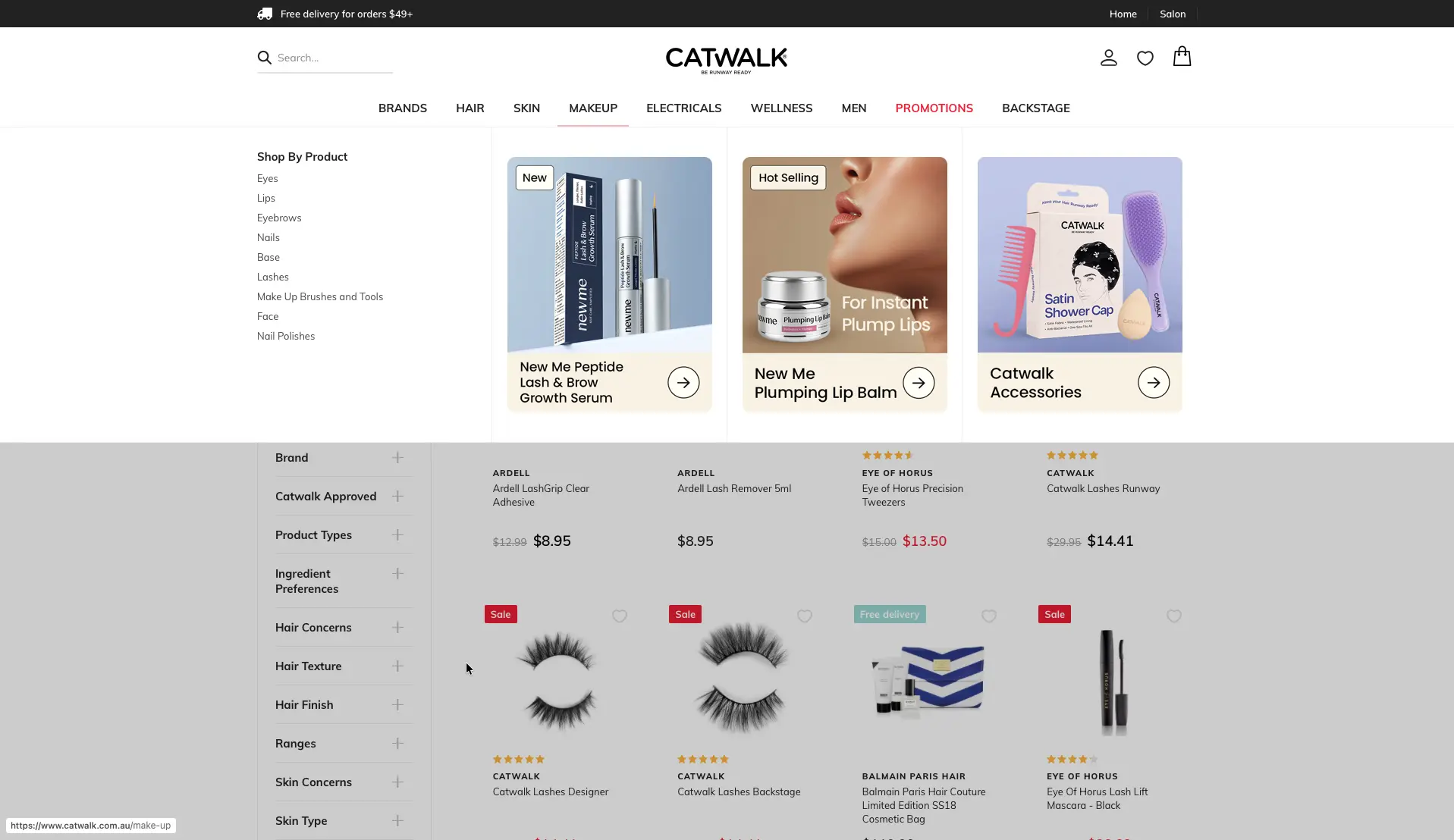
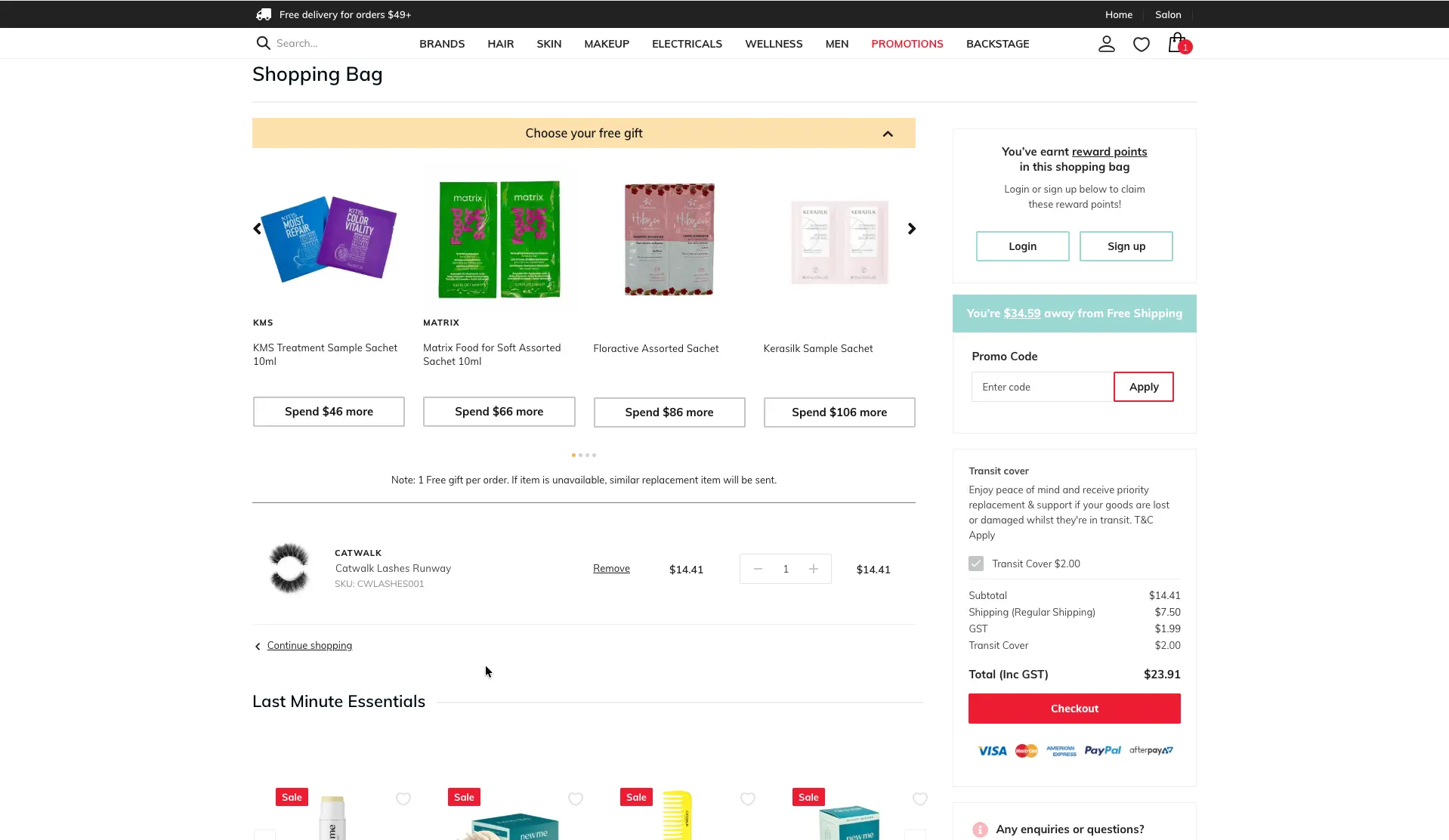
Live Website Screenshots
A look at the live Catwalk store after migration, optimization, and stabilization.

Struggling with Magento Performance, Cost, or Migration?
Let's optimize and scale your store the right way. Whether you're facing a migration, a performance bottleneck, or outdated infrastructure — we have the expertise to solve it cleanly and cost-effectively.
Contact Us to Discuss Your ProjectFrequently Asked Questions
Magento Cloud carries significant recurring infrastructure costs tied to Adobe's managed hosting. For many stores, Magento Community Edition running on optimized dedicated hosting delivers equivalent or better performance at a fraction of the cost — while providing greater control over server configuration, caching layers, and optimization settings.
The key is ensuring the migration is executed precisely, with proper server setup and performance tuning, so no capability is lost in the transition.
Yes — even when migrating between different module systems (such as native Magento to Amasty), it is possible to migrate all data without loss through custom development and precise data mapping. The process involves exporting data from legacy tables, building transformation scripts that map old data structures to the new module's schema, and running comprehensive validation checks before and after the migration.
For this project, every customer's Reward Points balance, transaction history, Gift Card code, remaining balance, and usage history was fully preserved and immediately accessible after go-live.
Core Web Vitals are a set of performance metrics defined by Google — including Largest Contentful Paint (LCP), Cumulative Layout Shift (CLS), and Interaction to Next Paint (INP) — that measure real-world user experience on web pages. Google uses these metrics as ranking signals, meaning poor scores can directly impact organic search visibility.
For eCommerce stores, CLS is particularly impactful: unexpected layout shifts during page load cause customers to misclick, lose their place, or abandon pages — directly affecting conversion rates. Fixing CLS and improving overall Core Web Vitals scores improves both SEO rankings and on-page user experience simultaneously.
Zero data loss is achieved through a structured, multi-stage migration approach: first, complete database backups are taken and verified before any migration steps begin. Data is then exported from the source environment, transformed using validated mapping scripts, and imported into the target environment in a controlled staging environment — not directly on the live store.
Post-import validation checks compare record counts, total balances, and key data points between the source and destination. Only after successful validation is the migration promoted to the live environment. This process eliminates guesswork and ensures every data point is accounted for before customers ever interact with the migrated store.
Yes — for this project we provided one full year of post-launch technical support following go-live. This included continuous monitoring of platform performance and error logs, proactive bug fixes for any issues identified post-migration, and ongoing performance tuning as traffic patterns evolved.
Long-term support is a critical part of any major migration or upgrade project. Edge cases that don't surface during testing can appear under real-world load conditions, and having an experienced team standing by ensures they're resolved quickly with minimal customer impact.